Two sellers list nearly identical homes on the same Camas street in the same month. One spends three weeks before the sign goes in the yard testing for radon and checking the crawl space for grading and moisture issues. The other skips it, confident the home shows well, and lets the buyer's inspector find out first. Neither seller has done anything wrong. But by the time each reaches closing, one is negotiating from a position of documented proof and the other is negotiating from a position of surprise, usually with less time and less leverage to work with.
That gap has less to do with the condition of either house and more to do with a mechanic of Washington disclosure law that rarely comes up at the listing appointment: once you order an inspection, you cannot un-know what it finds. In Camas, where the geology behind a house makes radon and drainage questions more likely to surface than in flatter markets, that timing decision carries more weight than most sellers realize.
Why Camas Soil Complicates the Radon Conversation
The porous soil across much of southwest Washington was pushed into place by the Missoula Floods, the glacial-era events that deposited uranium-bearing rock and sediment throughout the region. As that uranium decays underground, it produces radon gas, and porous soil gives that gas an easy path up through foundation cracks, crawlspace openings, and soil contact points into a living space. One local inspection firm puts the share of Camas homes with elevated radon at close to a quarter, and a Vancouver-based inspector citing Clark County data lands on the same one-in-four estimate for the county overall.
Neither number tells you what your specific house will read, and that's the point local inspectors keep making: radon levels shift based on soil type, foundation design, and ventilation, so a clean test next door says nothing about the house you're selling. The EPA sets its action threshold at 4 picocuries per liter, and testing is the only way to know which side of that line a given property sits on.
Where the Risk Concentrates
Camas radon exposure and drainage risk aren't spread evenly across the city. They cluster in a few recognizable conditions:
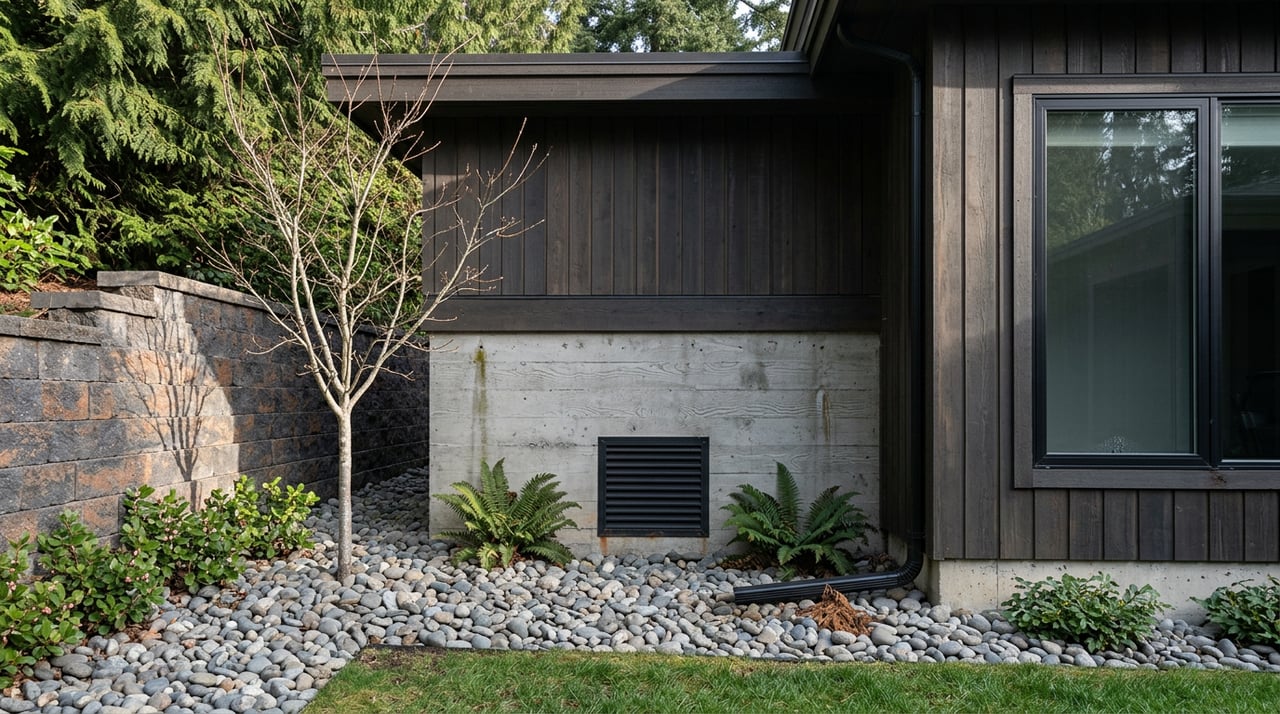
- Prune Hill and other elevated, hillside lots, where multi-level construction built to capture Mount Hood and Columbia River views also creates large crawl spaces and complex grading. Negative slope or downspouts discharging too close to the foundation can push water toward stem walls for years before it becomes visible.
- Homes near Lacamas Lake and the Lacamas Shores area, where lakeside moisture adds another layer to the standard inspection checklist.
- Older homes near the downtown core, where inspectors more frequently find aging clay sewer pipes and electrical panels that predate current code.
- Rural, acreage parcels further north, where private wells replace municipal water and dry rot inspections become part of the routine rather than an add-on.
That stratification matters because it isn't random. The hillside and lakeside segments carrying the most radon and drainage exposure are also the same segments commanding the highest prices in today's market, which means a large share of Camas transaction value runs directly through this risk profile.
The Legal Trap Nobody Explains at the Listing Appointment
Washington has required a Seller Disclosure Statement, universally known as Form 17, on nearly every residential sale since January 1, 1995 under RCW 64.06.020. The form runs several pages of yes, no, and don't-know questions, and the entire structure rests on one phrase: the seller's actual knowledge at the time the form is completed.
That phrase does more work than it looks like it does. The moment a seller has an inspection report in hand, they have actual knowledge of everything documented in it, and they can no longer mark "don't know" on the items that report addressed. A pattern of "don't know" answers across environmental questions on a house someone has owned for many years tends to invite exactly the kind of buyer scrutiny a seller was hoping to avoid.
Buyers, for their part, get a real check on the back end. Once Form 17 is delivered, they have three business days to rescind the purchase agreement for any reason, no explanation required, under RCW 64.06.030. Most Washington transactions deliver the form early, often alongside the listing materials, which means the rescission clock has frequently already run by the time inspections even begin.
Put those two facts together and the real lesson comes into focus. Skipping a pre-listing radon or drainage test doesn't avoid the disclosure question. It only decides who finds the answer, your inspector working on your timeline, or the buyer's inspector working on theirs, after mutual acceptance, with a deal already in motion.
What Pre-Listing Testing Actually Costs You, and Buys You
A standalone radon add-on to a Camas home inspection typically runs around $150. If the result comes back at or above the EPA's 4 pCi/L action level, a mitigation system generally costs between $800 and $2,500 depending on foundation type, with most residential jobs landing on the lower half of that range. That is not a cost most sellers avoid by skipping the pre-listing test. It's a cost most sellers pay anyway, just later and with less control over the terms. Industry estimates suggest more than 80 percent of sellers end up negotiating some form of repair credit once a buyer's inspection turns up elevated radon, which means the expense shows up on the closing statement either way.
The difference is what that number is doing in the negotiation. A radon reading you commissioned before listing, with a mitigation system already installed and a clean post-mitigation test in hand, is a settled fact a buyer factors into a confident offer. The same reading, discovered by a stranger's inspector during the buyer's inspection contingency period, becomes a live negotiation with a deadline attached, at the exact moment you have the least flexibility to manage it.
What This Means in Today's Camas Market
That flexibility matters more this year than it did during the frenzied seller's-market conditions of recent years. Northwest Multiple Listing Service data through June 2026 puts the citywide Camas median sale price at $629,900, with homes moving in a median of 24 days and just 3.2 months of inventory, still tilted toward sellers but nowhere near the multiple-offers-in-a-weekend pace of the recent peak.
Zoom into the 98607 zip code, which captures much of the hillside and lakeside inventory around Prune Hill and Lacamas Lake, and the picture shifts. Altos Research's weekly index for that zip put the median list price at $1,049,900 for the week of July 15, 2026, with a Market Action Index of 33, a reading Altos classifies as a slight seller's market that has been gradually cooling. That gap between the citywide median and the 98607 figure is the price premium buyers pay for the view lots and lake proximity, which happen to be the same geography carrying the highest radon and drainage exposure in this piece.
A market snapshot from early July 2026 adds one more data point worth sitting with: a median days-on-market of 63 against an average of 133 for active Camas listings. That's a wide spread, and it tells a specific story. A cluster of listings is still moving close to the pace of a seller's market, while another cluster, likely overpriced, underprepared, or both, sits for months and drags the average up. In a market with that kind of spread, an inspection surprise discovered mid-escrow is exactly the kind of disruption that pushes a listing out of the fast lane and into the slow one.
Frequently Asked Questions
Do I have to test for radon before I sell a home in Camas? No. KDS Homebuyers says Washington does not require radon testing as a condition of sale. Sellers are only required to disclose radon problems they actually know about, which is precisely why the timing of testing matters so much.
What happens if my buyer's inspector finds high radon after we're already under contract? It becomes a live negotiation during the buyer's inspection contingency, typically resolved through a price reduction, a closing credit, or a seller-funded mitigation system before closing. The outcome is often similar to what a pre-listing test would have produced. The difference is you're negotiating on the buyer's timeline instead of yours.
Does new construction in Camas skip these issues? Not entirely. Builder-installed passive radon mitigation systems can fail, and radon levels shift seasonally, so even a newly built home benefits from its own test rather than relying on the builder's original design.
Every Camas listing carries its own version of this timing decision, and the right call depends on the specific lot, the specific soil, and the specific slice of the market that listing sits in. If you're weighing when to test, what to disclose, or what a property like yours is actually worth in this stage of the cycle, Louise James can walk through the numbers with you before a buyer's inspector does it for you. Get a free home valuation and start the conversation with the facts already on your side.
This article is general information, not legal, tax or financial advice. Consult a qualified professional about your situation.