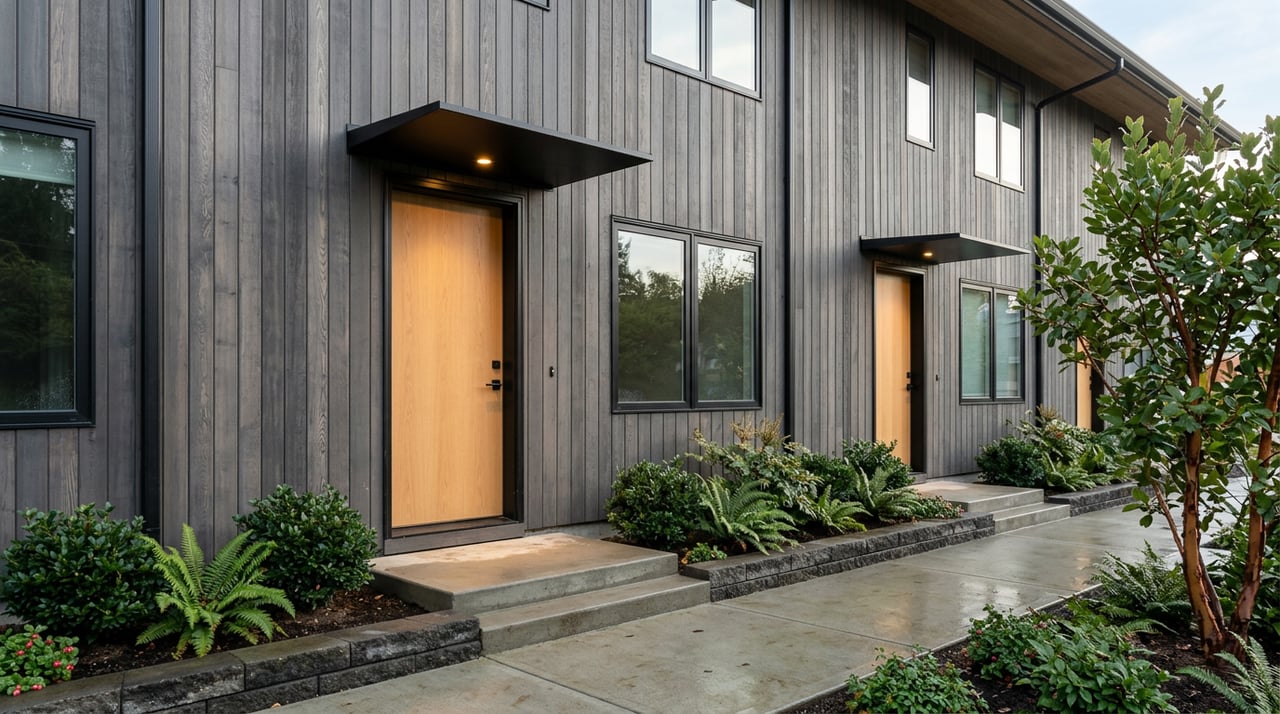
Trying to decide between a condo and a townhome in Vancouver can feel like comparing apples to pears. Both can lower your maintenance load and get you into great locations, but they work very differently on budget, rules, and long‑term ownership. If you are weighing lifestyle needs against monthly costs, you are not alone. In this guide, you will learn how each option works in Washington, what local prices look like, and a simple checklist to make a confident choice. Let’s dive in.
Quick snapshot: prices and expectations
If you are value hunting, condos often start lower than other home types in Clark County. The county’s 2025 median closed sale price for condominiums was about $324,450, while single‑family homes were about $541,500, based on the annual county review from the Northwest MLS. You can use those as a baseline when you size up neighborhoods and buildings in Vancouver. You can review the county figures in the Northwest MLS annual summary for Clark County for full context and trend notes.
- Reference: See the Clark County 2025 medians in the Northwest MLS county report for apartments and homes. View the NWMLS county review.
What makes a condo a condo in Washington
In Washington, a condominium is a legal form of ownership that separates your private unit from the shared “common elements,” like exteriors, roofs, and hallways. Unless the recorded declaration says otherwise, the association maintains common elements and you maintain your unit. The Washington Condominium Act explains these basic duties. You can read the upkeep rules in RCW 64.34.328.
Many newer or recently updated communities are governed by the Washington Uniform Common Interest Ownership Act (WUCIOA). WUCIOA already applies to communities created after July 1, 2018, and it becomes the main statute for all common‑interest associations on January 1, 2028. WUCIOA sets transparency standards, budgets and reserves expectations, and buyer disclosures. Learn more in Chapter 64.90 RCW.
What a “townhome” means in Vancouver
“Townhome” is a style description, not a legal category. In practice, a Vancouver townhome may be one of two things. It might be fee‑simple, where you own the land and the structure, often with an HOA that maintains shared landscaping or a private road. Or it could be legally recorded as a condominium, where your ownership is of a unit with shared elements. The only way to know is to check the recorded plat and declaration in the seller’s packet. WUCIOA governs how those communities run and what must be disclosed. See the statute overview in Chapter 64.90 RCW.
HOA responsibilities and your maintenance
Who fixes what depends on the governing documents, but there are common patterns. Under both the Condominium Act and WUCIOA, associations generally handle the maintenance, repair, and replacement of common elements. Unit owners take care of their interior components and anything the documents define as part of the unit. Review the statutory maintenance language in RCW 64.34.328 and association duties in RCW 64.90.440.
In Vancouver, dues can vary widely. Downtown and waterfront condo buildings that include elevators, building insurance, and amenities often post higher monthly HOAs. Smaller garden‑style condo communities tend to have moderate dues that mainly cover roofs and grounds. Fee‑simple townhome communities sometimes have lower dues because there are fewer shared systems, though this is not universal. Always confirm the division of responsibility and coverage in the recorded documents.
The resale certificate is your safety net
Washington gives you a clear window to review a community before you commit. When required, the seller must deliver a resale certificate that outlines current and planned assessments, recent budgets, reserve studies, insurance coverage, bylaws and rules, and any lawsuits. You have a statutory right to cancel within a short window tied to receiving a complete, correct resale certificate. See exact requirements and purchaser rights in RCW 64.90.640.
As you read the packet, focus on reserves, recent or pending special assessments, insurance deductibles and exclusions, and meeting minutes. WUCIOA also clarifies record access and budget processes, which can help you judge how well the association is managed. For an overview of WUCIOA’s governance updates, see Chapter 64.90 RCW.
Monthly cost: condo vs townhome
Your monthly spend is more than the purchase price. Build your budget around these items:
- Mortgage and property taxes. Use the county medians to set a baseline, then refine by neighborhood and building.
- HOA dues. Vancouver listings show dues ranging from modest amounts to several hundred dollars per month in amenity buildings. Confirm what the dues include and whether utilities are shared.
- Insurance. Condos usually require an HO‑6 policy for the interior plus the association’s master policy for the building. Fee‑simple townhomes usually use HO‑3 or HO‑5 policies that cover the structure and lot. Verify the split in the resale packet. WUCIOA lists the insurance details that must be disclosed. See RCW 64.90.640.
- Special assessments and reserves. Healthy reserves reduce the chance of special assessments. Always read the most recent reserve study and budget. Review WUCIOA’s budget and reserve study provisions in Chapter 64.90 RCW.
Lifestyle fit: how to choose
Start with your day‑to‑day life. If you want elevator access, on‑site amenities, and minimal exterior upkeep, a condo in a well‑run building may be a good fit. If you want a small private yard, a garage with more storage, and more control over exterior items, look at fee‑simple townhomes in newer Vancouver neighborhoods.
Check practical items next: stairs versus single‑level living, parking and guest parking, pet rules, storage, and any rental restrictions. Think about commute routes and proximity to services you use often. Rules vary by community, so confirm everything in the governing documents before you write an offer.
Neighborhood notes around Vancouver
- Downtown and Waterfront. Expect premium pricing and higher HOAs that often cover elevators, building insurance, and shared amenities. This setup can suit downsizers who want walkable, low‑maintenance living near restaurants and the river.
- Northeast Vancouver, Salmon Creek, Hazel Dell. You will see more attached new construction and townhome options. Many of these communities post moderate dues and offer modern floor plans and garages.
- Older garden‑style condos across the city. These can offer approachable entry points and often one‑level layouts. Compare reserve studies and assessment history to gauge long‑term cost.
Appreciation and resale considerations
In 2025, Clark County condominium medians rose modestly year over year, while single‑family medians were roughly flat to slightly down depending on the period. That shows how attached housing can hold value when demand for lower‑maintenance living is steady. You can review the county’s closed‑sale medians and trend notes in the NWMLS annual report and the broader NWMLS press release.
Over longer cycles, fee‑simple townhomes often track single‑family trends more closely because you own the land and structure. Condo appreciation varies more by building condition, HOA health, and supply of similar units. Since some “townhomes” are actually condos by law, verify the legal form so you understand how your property may behave in the market. See the statutory framework in Chapter 64.90 RCW.
Step‑by‑step due diligence checklist
Use this checklist before you decide or write an offer:
- Confirm the legal form. Is it a recorded condominium or a fee‑simple lot in an HOA? The recorded declaration controls duties and disclosures. Start with Chapter 64.90 RCW.
- Request the resale certificate and governing documents. Review assessments, reserves, insurance, litigation, budgets, minutes, and rules. You have cancellation rights tied to delivery under RCW 64.90.640. For practical guidance, Washington REALTORS explain what to expect in their Legal Hotline overview. Read the WUCIOA explainer.
- Build your full monthly budget. Add mortgage, taxes, HOA dues, expected utilities, and a cushion for potential assessments.
- Check the insurance split. Confirm master policy coverage, deductibles, and what your personal policy must cover under RCW 64.90.640.
- Review reserves and management. Read the latest reserve study, budget, and recent minutes. WUCIOA outlines transparency and records access in Chapter 64.90 RCW.
- Match the home to your lifestyle. Weigh stairs or elevator access, parking, storage, pet policies, and any rental rules.
- Ask how lenders view the property. Some lenders apply extra review to condos or to communities with low reserves. A clear understanding upfront protects your timeline and approval.
Work with a local advisor
Choosing between a condo and a townhome is about fit, not just price. The strongest decisions come from reading the documents closely, understanding what the dues include, and confirming how the legal form affects insurance and lending. If you want help narrowing the options in Vancouver and across Clark County, connect with Louise James for a friendly, data‑forward consult tailored to your goals.
FAQs
What is the main legal difference between a condo and a townhome in Washington?
- A condo is a legal regime where you own a unit plus a shared interest in common elements, while a “townhome” can be fee‑simple land ownership or a condo depending on how it was recorded; see RCW 64.34.328 and Chapter 64.90 RCW.
How much are typical HOA dues in Vancouver condos and townhomes?
- Dues vary widely, from modest amounts in smaller or fee‑simple communities to several hundred dollars per month in amenity buildings; always confirm exact coverage and amounts in the resale certificate.
What is a resale certificate and why does it matter for Vancouver buyers?
- It is the seller‑provided disclosure packet that must include budgets, reserves, assessments, insurance, litigation, and rules, and it triggers your cancellation window under RCW 64.90.640.
Who fixes the roof in a condo versus a fee‑simple townhome?
- In most condos the association maintains common elements like roofs, while fee‑simple townhome owners are often responsible for their own exteriors; confirm the division of duties in the documents and see RCW 64.90.440.
Are downtown Vancouver condos usually pricier than the county median?
- Yes, many downtown and waterfront buildings trade above county medians and often carry higher HOA dues due to elevators, building insurance, and amenities; review current MLS data for the specific building and floor tier.
Do lenders treat condos differently from fee‑simple townhomes?
- Often yes; some lenders require project approval and may scrutinize condo reserves and insurance more closely, so ask about condo guidelines early in your pre‑approval process.