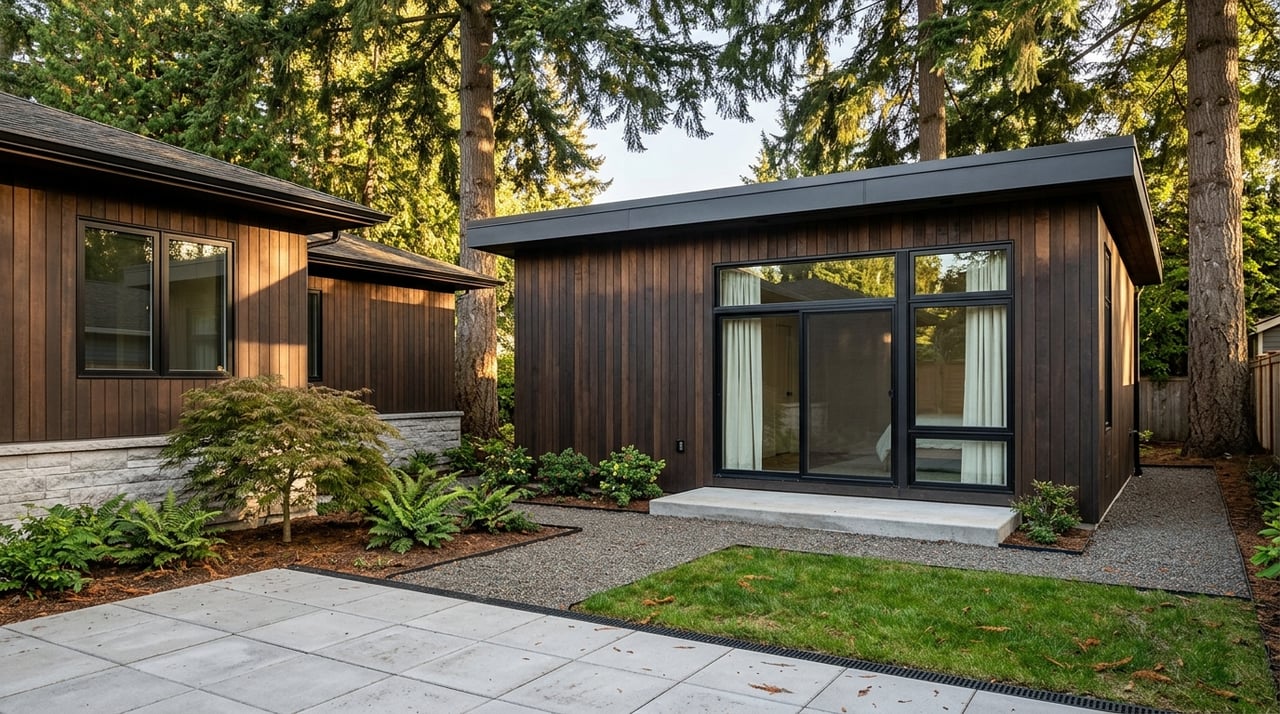
Wondering if a property in Vancouver could help you live in one space and offset costs with another? You are not alone. For many buyers and homeowners, ADUs and house hacking have become practical ways to add flexibility, create rental potential, and make a property work harder for your goals. In Vancouver, WA, the rules are more ADU-friendly than many people realize, but the details still matter. Let’s dive in.
What ADUs Mean in Vancouver
An accessory dwelling unit, or ADU, is a secondary self-contained home on the same lot as a primary residence. In Vancouver, an ADU can be within the main home, attached to it, or detached, as long as it has its own kitchen and private bath and is built or converted with the proper permit. The city is clear that the unit is legal only when there is an established building permit, which makes permit status one of the first things to verify on any property you are considering.
For buyers, that matters because a finished bonus space is not automatically a legal ADU. For homeowners, it means your plans should start with zoning and permit research before you spend money on design or construction.
Why ADUs Work for House Hacking
House hacking usually means you live in one part of a property and rent out another part to help with monthly costs. That can include your mortgage payment, utilities, taxes, or general upkeep. ADUs fit this strategy well because they create a separate living space while keeping everything on one lot.
According to guidance from Fannie Mae on accessory dwelling units, ADUs may be located within, attached to, or detached from the primary residence. Fannie Mae and Freddie Mac also recognize that ADUs can provide rental income in some situations, although lender rules and documentation requirements still apply.
In plain terms, an ADU can give you options. You might live in the main home and rent the ADU, live in the ADU and use the main home differently, or create flexible space for a long-term tenant or household member. The right setup depends on the property, your financing, and local permit rules.
Common ADU Types in Vancouver
Internal conversions
This option uses space inside the main house, such as a basement apartment or other separate living area. It can be appealing if the home already has a layout that supports privacy and independent access.
Attached ADUs
An attached ADU is connected to the main home. This could be an addition, a unit over a garage, or another connected living space that functions as its own dwelling.
Detached backyard units
Detached ADUs are separate structures on the same lot, such as a cottage or small backyard home. Vancouver allows detached ADUs, and Washington state law requires cities and counties to allow them.
Garage conversions
Converting an existing garage or outbuilding can be one of the most practical paths, depending on the site and condition of the structure. Both Vancouver and Clark County explicitly allow this type of conversion, subject to code and permits.
New construction ADUs
Some owners build a new ADU alongside a primary home or add one later. The city also notes that these projects can be complex, so professional guidance is strongly recommended.
Vancouver City Rules to Know
If the property is inside Vancouver city limits, the city says ADUs are allowed on all lots as limited uses. You may be able to create up to two ADUs per parcel, and owner occupancy is not required.
That is a meaningful change for buyers and owners who want flexibility. The city also says:
- No additional on-site parking is required for the ADU
- An ADU can be up to 1,000 square feet
- Existing garages or outbuildings may be converted
- A covenant is no longer required under recent state-law changes
- The ADU no longer needs to be visually subordinate or architecturally compatible with the main dwelling
You can review the city’s current standards on the City of Vancouver ADU page.
Clark County Rules Outside City Limits
If a property is outside Vancouver city limits, Clark County rules apply instead. That is an important distinction because permit pathways, utility requirements, and other approvals may differ.
Clark County’s residential permits page notes that ADU remodels and additions may require an ADS permit, while new ADU construction requires a residential permit. The county also notes that additional approvals may be needed for electrical work, public water or sewer, or septic.
The county’s urban ADU guidance also says an ADU cannot be occupied until a Certificate of Occupancy is issued. In many cases, the ADU must connect to public water and sewer unless a waiver applies.
How State Law Supports ADUs
Washington’s 2023 ADU law made several ADU rules more consistent across local governments. Under RCW 36.70A.681, cities and counties may not require owner occupancy for ADUs. The law also says local governments must allow at least two ADUs on qualifying lots in urban growth areas and limits how restrictive local parking, setbacks, yard coverage, aesthetic requirements, and design review standards can be.
For you, that means the statewide trend is toward more flexibility. Even so, each property still needs to be checked for zoning, site constraints, and permit history.
Financing Questions to Ask Early
One of the biggest misunderstandings around house hacking is assuming projected rent will always count for loan qualification. It does not work that way automatically.
Fannie Mae’s rental income guidance explains that rental income from an existing ADU on a one-unit principal residence may be used in some qualifying scenarios. Freddie Mac and Fannie Mae both allow for ADU-related income in certain cases, but the exact treatment depends on the loan program and documentation.
That is why one of your best early steps is talking with a lender before you make assumptions about payment offset. If you are buying with a house hacking plan in mind, that conversation can help you set realistic expectations from the start.
Property Tax Relief May Be Available
There may also be a tax benefit worth exploring if you are adding an ADU through major remodeling. The Washington State Department of Commerce says owners may qualify for a three-year property tax exemption for extensive remodeling improvements to a single-family dwelling, including ADU construction, if the application is filed before construction is complete.
According to Washington Commerce ADU guidance, the remodel cost must not exceed 30% of the structure’s prior assessed value. Clark County’s assessor also notes that eligible owners may receive relief of up to 30% of the new value for up to three years.
Best First Steps Before You Buy or Build
ADUs can be a smart strategy, but feasibility always comes down to the specific property. Before you commit to a purchase or construction plan, it helps to move in a clear order.
1. Confirm the property jurisdiction
First, find out whether the property is inside Vancouver city limits or in unincorporated Clark County. That single detail determines which zoning and permit rules apply.
2. Verify the zoning and permit path
Next, review the local ADU rules and permit requirements. If the property already has a second living space, confirm whether it was legally permitted.
3. Check utilities and site constraints
Water, sewer, septic, electrical capacity, and lot conditions can all affect what is possible. Clark County specifically notes that utility and system approvals may be required.
4. Talk with the right professionals
Vancouver recommends hiring a professional because ADU projects are complex. Depending on your plan, that may include an experienced real estate agent, lender, designer or architect, and contractor.
What This Means for Vancouver Buyers
In Vancouver, ADUs have become a serious option for buyers who want flexibility built into their purchase. The city allows ADUs on all lots, does not require owner occupancy, and does not require extra on-site parking for the ADU. Add statewide support for detached units and garage conversions, and you can see why more buyers are paying attention.
The key is to focus on legal use, permit status, financing, and utility feasibility before you fall in love with a plan. If you are thinking about buying a home with ADU potential or evaluating whether a current property could support a house hacking setup, local guidance makes all the difference.
If you want help identifying properties in Vancouver or Clark County that may fit your goals, Louise James can help you evaluate options with a practical, local-first approach.
FAQs
Can I build an ADU on a property in Vancouver, WA?
- Yes. Inside Vancouver city limits, the city says ADUs are allowed on all lots as limited uses, while properties outside city limits follow Clark County zoning and permit rules.
Do I have to live on the property to have an ADU in Vancouver, WA?
- No. Vancouver says owner occupancy is not required, and Washington state law also bars local governments from requiring it.
Can I convert a garage into an ADU in Vancouver or Clark County?
- Yes. Vancouver, Clark County, and Washington state law all allow conversion of existing structures like garages, subject to code and permitting.
Does an ADU in Vancouver, WA require extra parking?
- Inside Vancouver city limits, no additional on-site parking is required for the ADU, although the required parking for the main dwelling must remain.
Can rental income from an ADU help me qualify for a mortgage?
- Sometimes. Fannie Mae says rental income from an existing ADU on a one-unit principal residence may be used in some qualifying scenarios, but lender rules and documentation requirements vary.
Is there a property tax exemption for building an ADU in Washington?
- Possibly. Washington says some owners may qualify for a three-year property tax exemption for extensive remodeling that includes an ADU, but the application must be filed before construction is complete.